
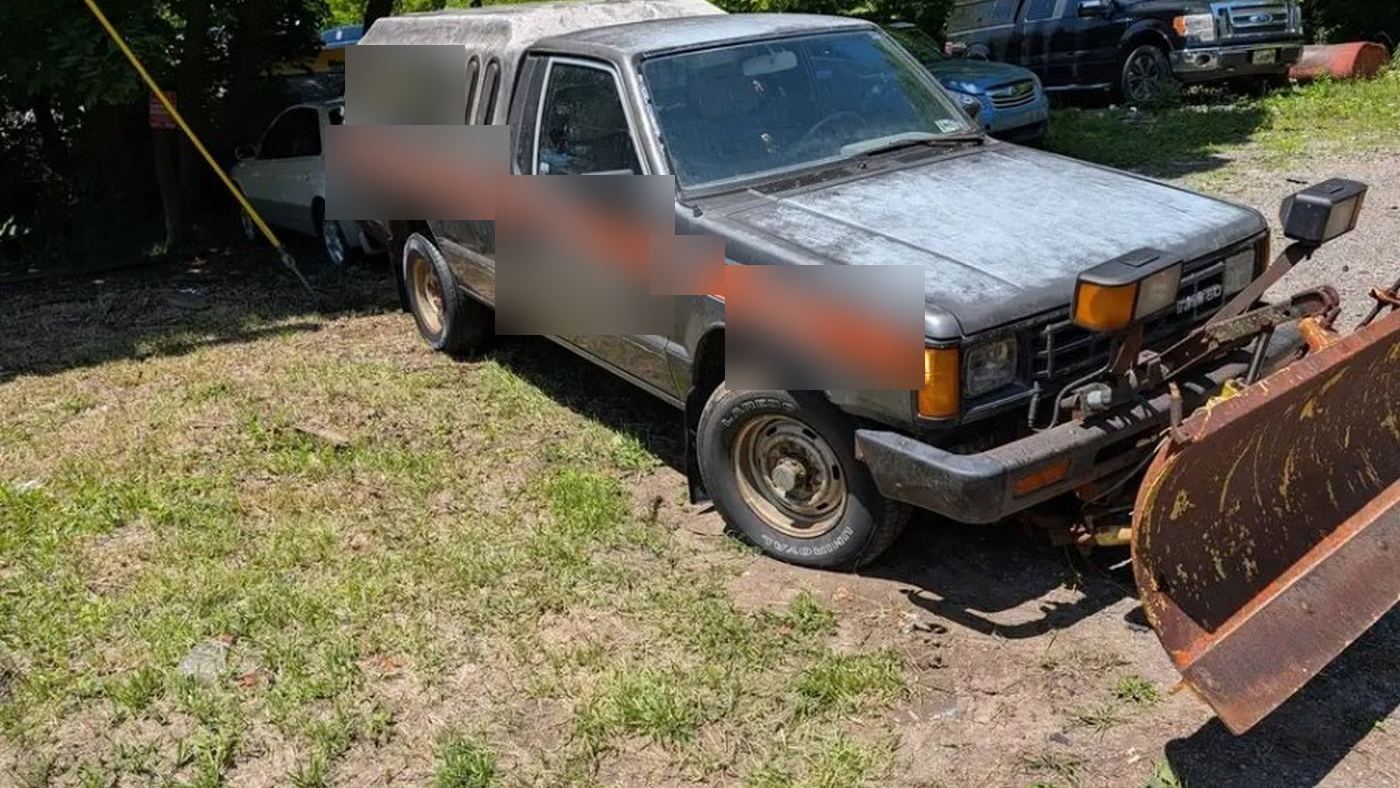
I scored a 1988 Dodge D50 — 5-speed, 4x4, working Meyers plow — for $800 delivered to me. Not a restoration candidate. A cheap, capable yard truck with occasional road use in mind, if the basics can be made safe.
It runs on a jump. It does not stop. The interior is a biohazard. That is the honest trade for the price.
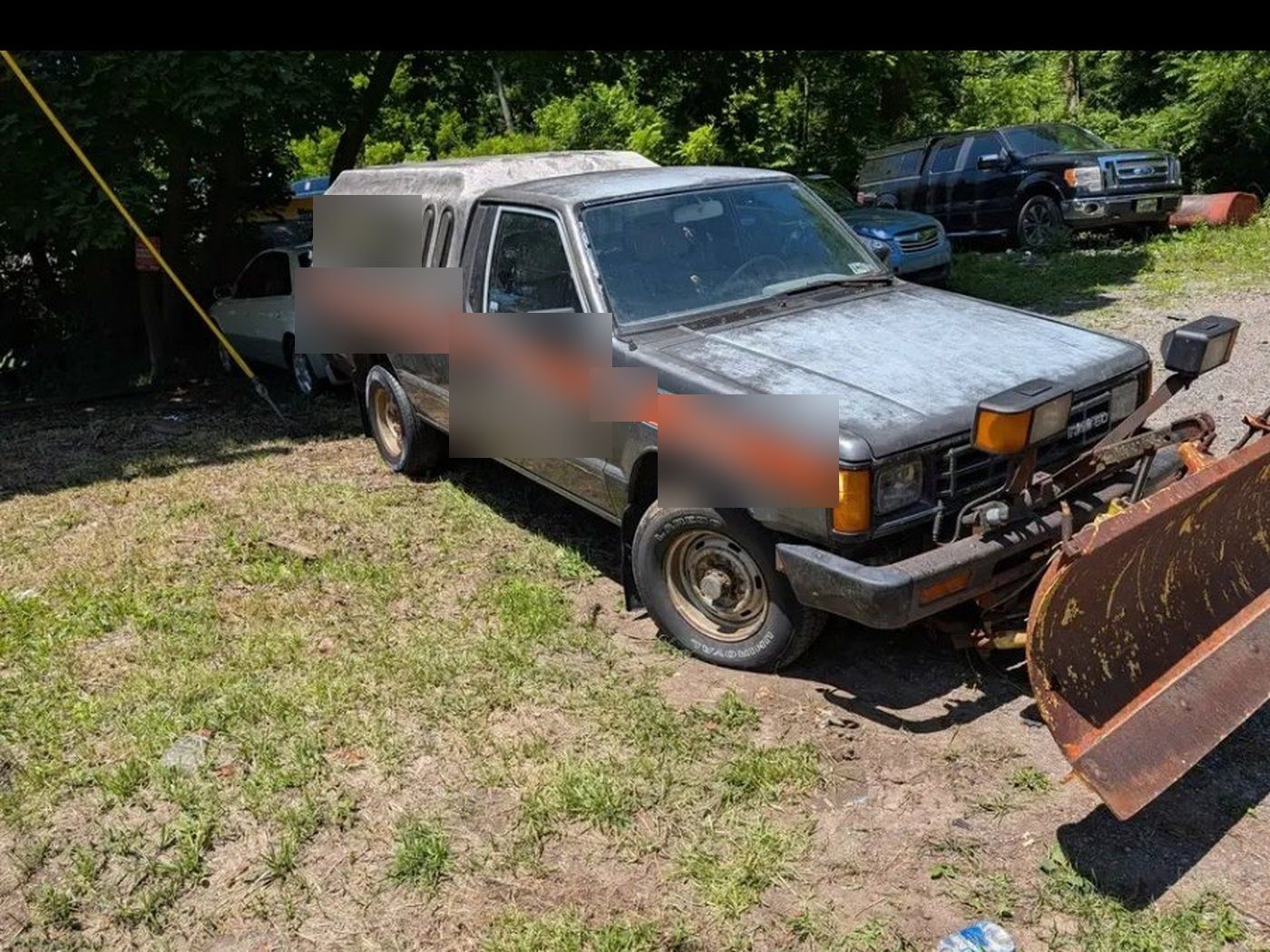
What Showed Up
Documentation for both the plow and the truck came with it. Cap on the bed. Frame looks pretty solid on a first walk-around. A few body mounts are rough but acceptable for yard duty and short local trips once brakes exist again.
Mechanical and safety inventory so far:
- Clutch cable broken — replacement already ordered
- Fan belt broken — replacement already ordered
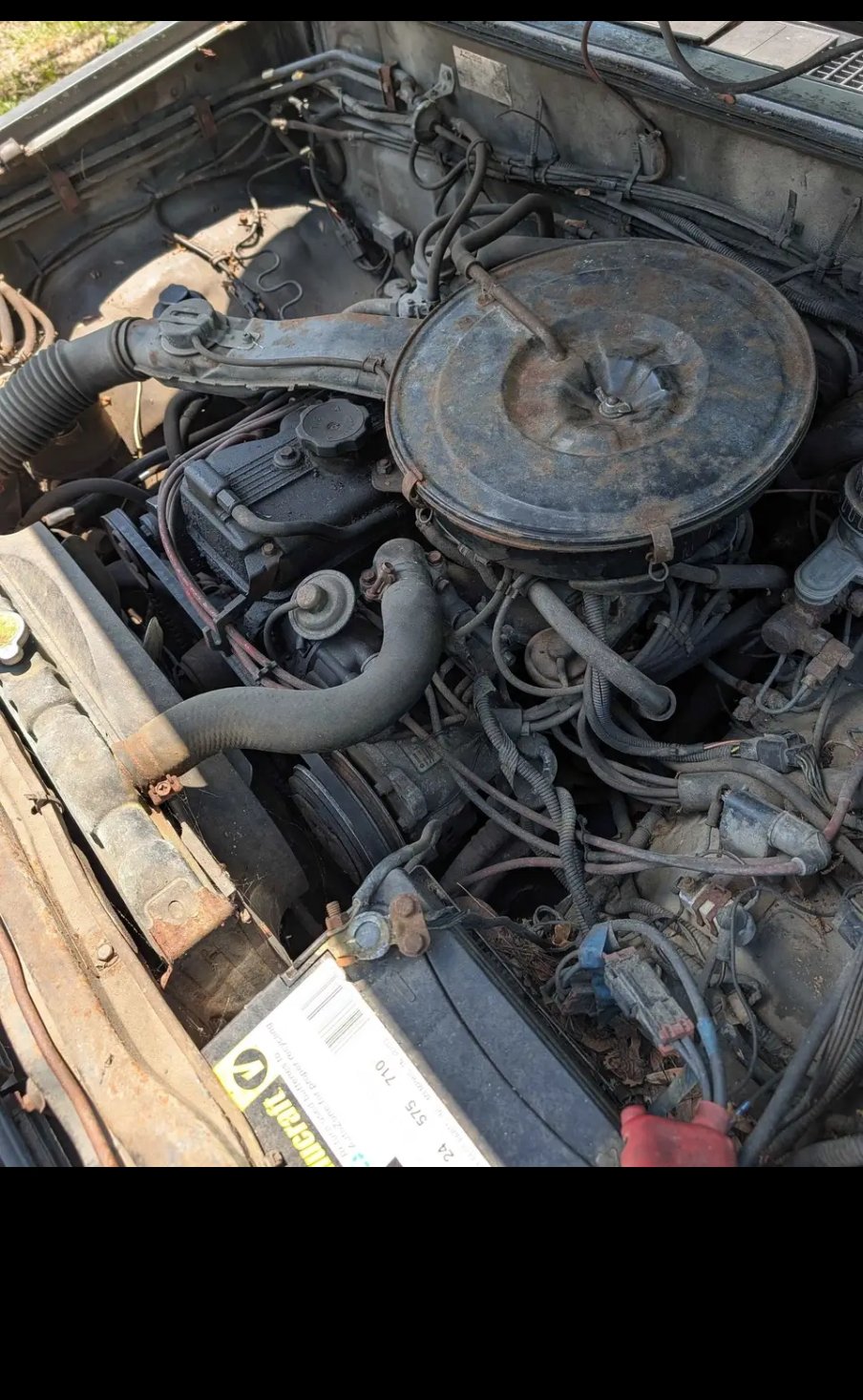
- Battery tray rusted out
- No brakes — reservoir empty, pedal does nothing
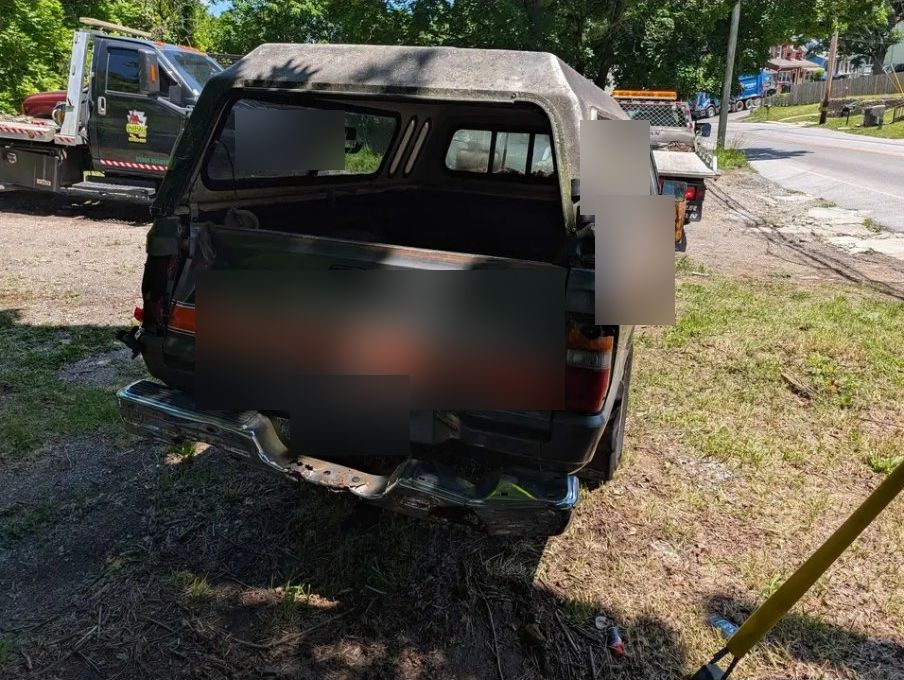
- Driver’s side of the bed smashed in — bed will eventually need replacement or a flatbed conversion
- Starts with a jump — engine side is not a total mystery
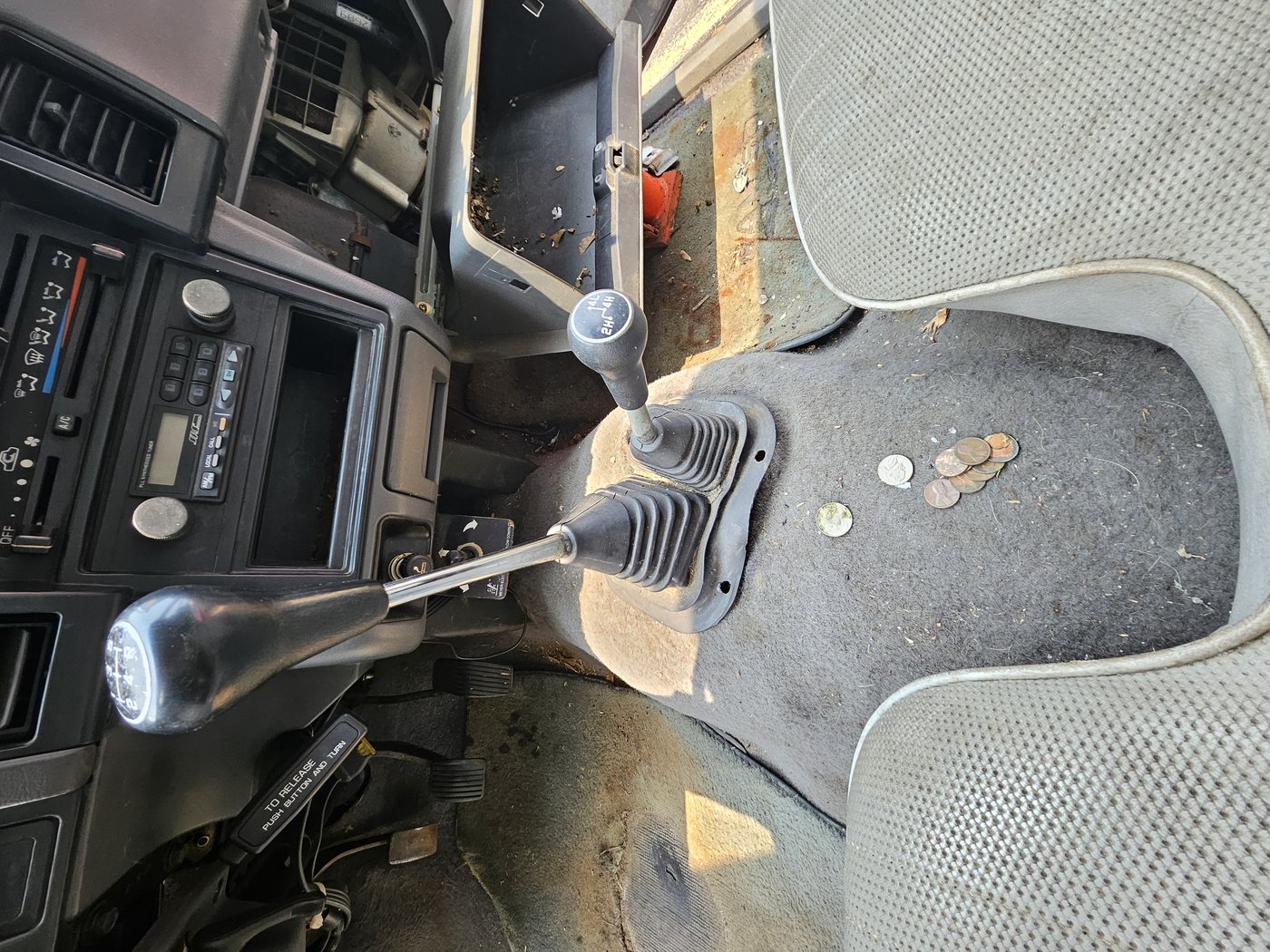
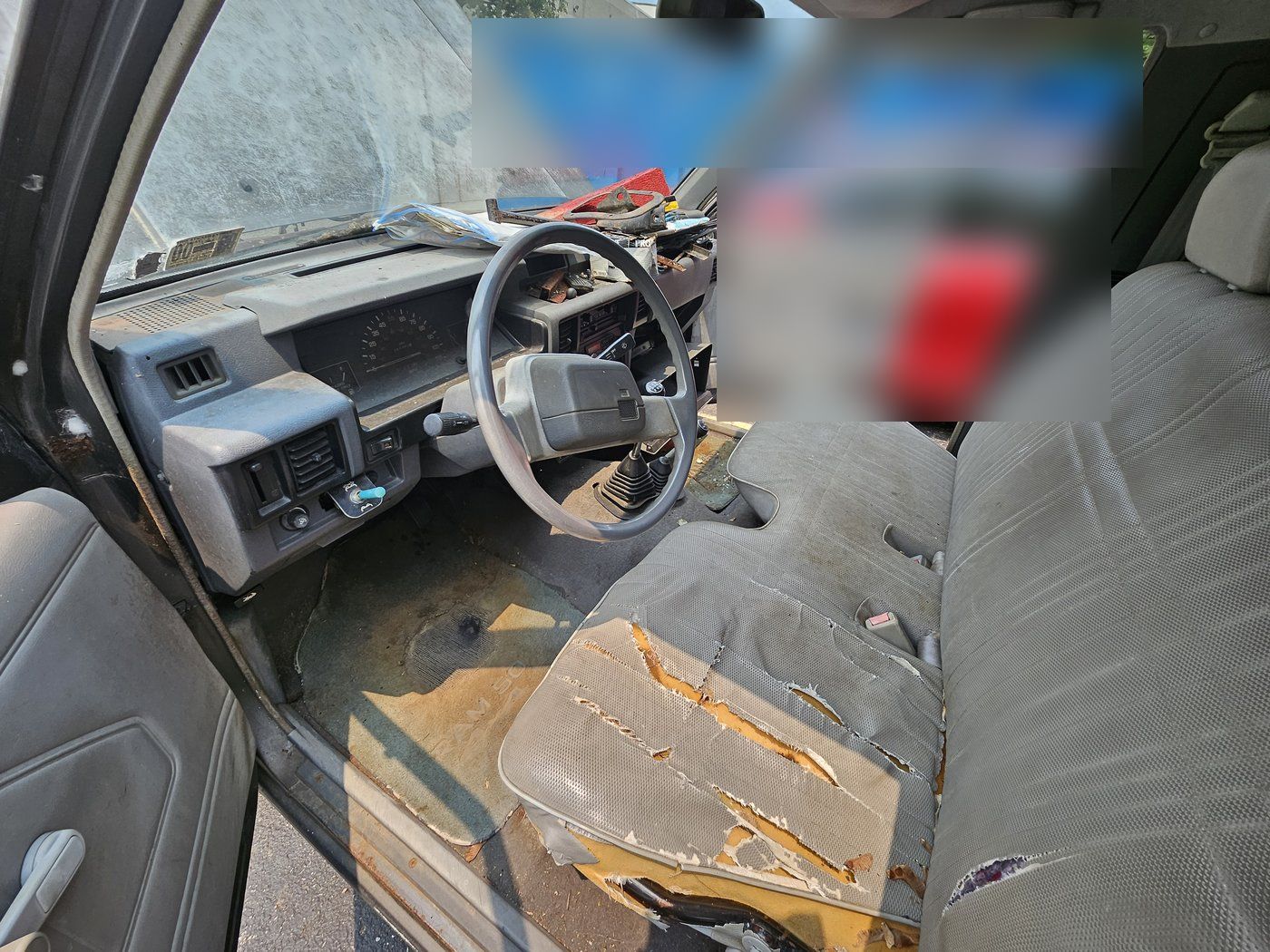
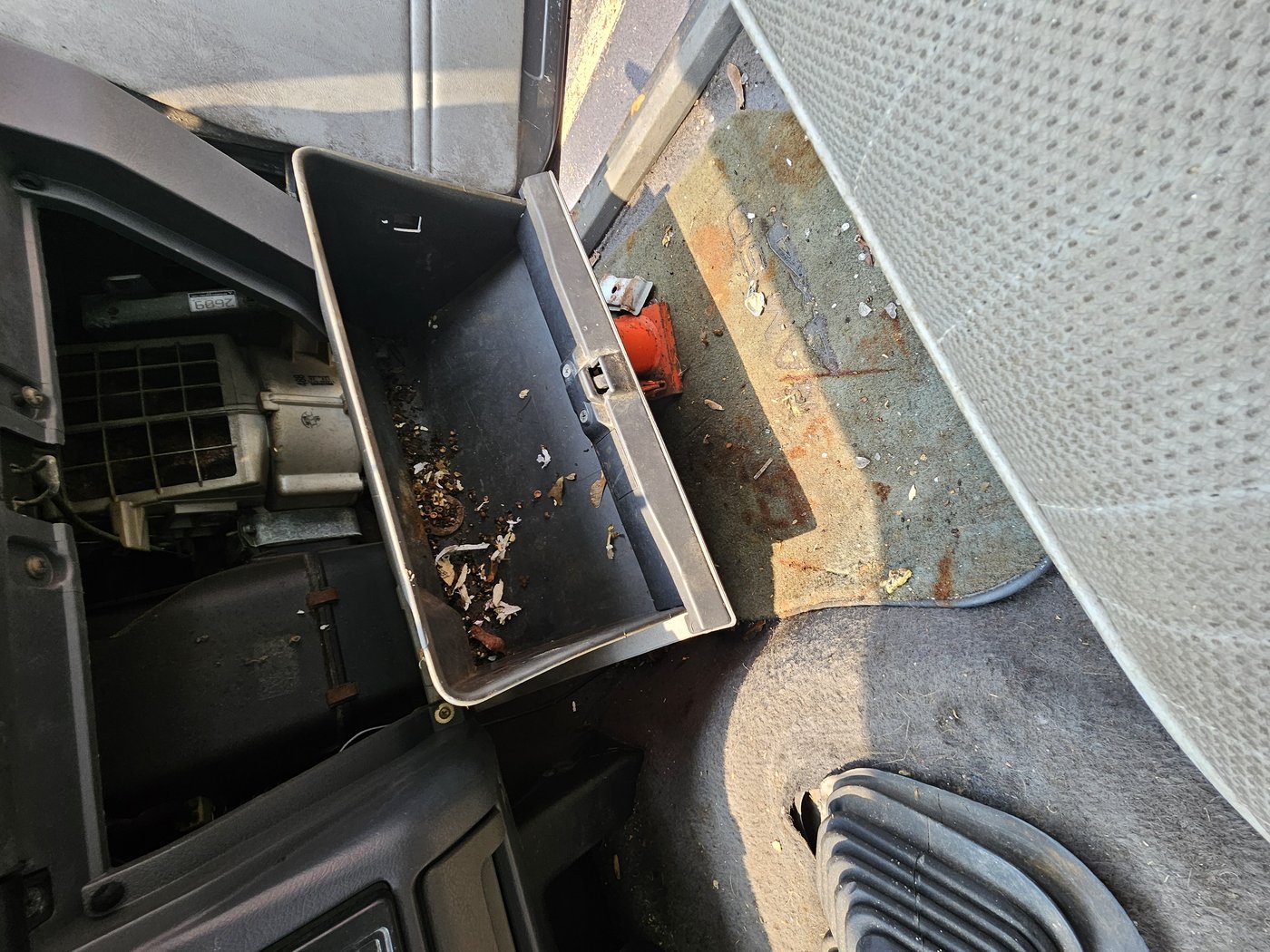
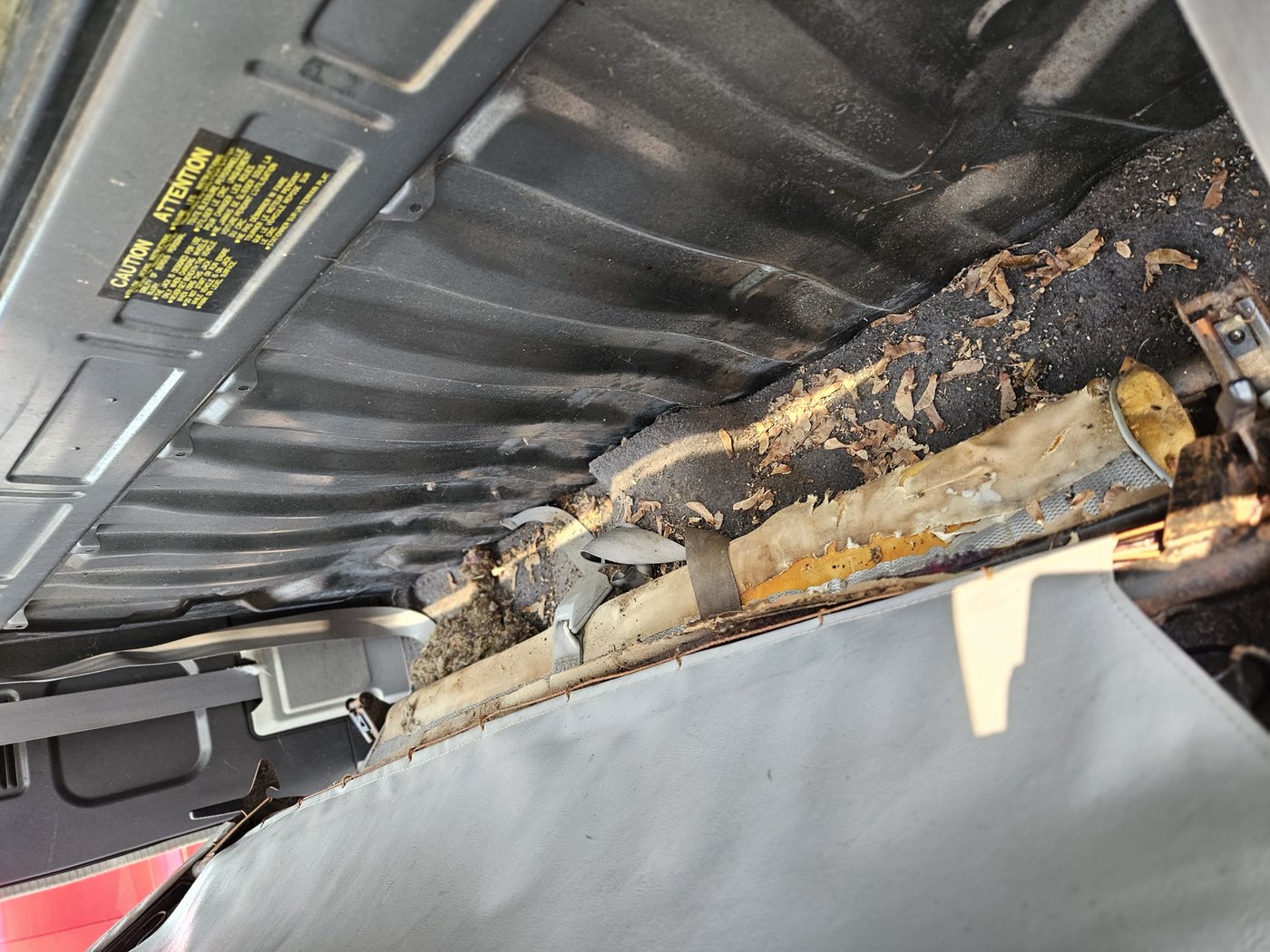
The cab is filthy — heavy mouse droppings, leaves, debris, garbage, and loose tools. That is not a “detail later” footnote. It is a cleanup and PPE job before the truck becomes a daily yard tool. Efficiency still means not breathing rodent dust for free.
Immediate Plan: Make It Move
Main goal right now is simple: get it running and driving under its own power.
- Install the new clutch cable
- Install the new fan belt
- Jump it, warm the systems, and see if it moves in gear
If it rolls under its own power after the cable and belt, the next hard gate is brakes — empty reservoir and a dead pedal mean no road use, period. Battery tray is a follow-on so the electrical side is not hanging on rust and zip ties. None of that needs a full rebuild budget. It needs prioritization: motion first, then stop, then hold a battery that stays put.
Intended Use
This is a yard truck with a plow, not a daily driver cosplay. Occasional road use only if brakes, steering, lights, and the rest of the safety basics check out. The smashed bed does not block that mission; a flatbed or used bed can wait until the truck earns the time. At $800 delivered with a working plow and a 4x4 five-speed, the efficiency case is tool capability per dollar — not pride of ownership.
What’s Next
When the clutch cable and fan belt land: install, jump, test movement. Brakes and battery tray after that. More photos as the cab gets cleaned and the first drive under its own power either works or reveals the next cheap problem. No schedule promises — just the next functional step.